Browse Items (51 total)
Sort by:
Candidate Fact Sheet and League of Conservation Voters Ratings
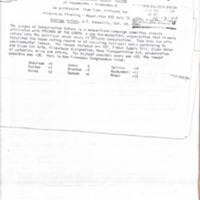
A 1970 voter guide produced by Ecology Action at the University of Tennessee summarizing environmental voting records, League of Conservation Voters scores, and candidate positions on issues such as pollution control, mass transit, pesticides, and…
University of Tennessee Environment Center Program Brochure
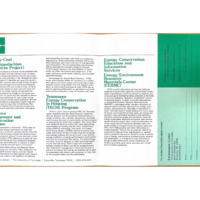
Brochure outlining research programs and services related to energy conservation, environmental impact, and resource management, with emphasis on coal mining and sustainability.
Summary of Abiding Appalachia: Where Mountain and Atom Meet by Marilou Bonham Thompson
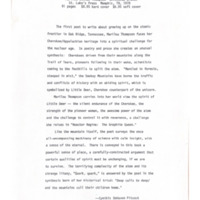
Review of Abiding Appalachia: Where Mountain and Atom Meet by Marilou Bonham Thompson, focusing on Appalachian identity, Cherokee history, and nuclear themes. Includes an accompanying check from the author related to the review.
Message from O. K. Sergeant (President of the Smoky Mountains Hiking Club)
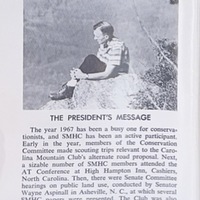
A message from O.K. Sergeant, the president of the Smoky Mountains Hiking Club in 1968 on the year and the efforts that club members are making for conservation of the parks.
Letter from the Appalachian Trail Conference to Steve, a leader of the hiking club
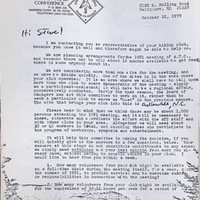
A letter from the Appalachian Trail Conference to the leader of a hiking club in Baltimore Maryland requesting cooperation and arrangements with the club to hold their conference in the park.
Norris Lake Marina
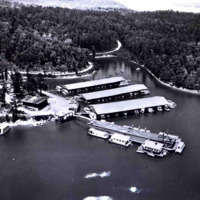
This aerial photo of Norris Lake shows how the area changed after Norris Dam was built in 1936. Land that was once forests, farms, and small communities was flooded to create the lake. The shoreline is now used for marinas and recreation instead of…
Norris Dam
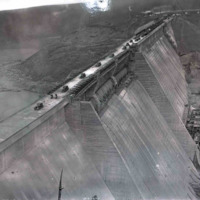
This photo shows the face of Norris Dam and its power facilities, highlighting the scale of the structure and the control it exerts over the river. Built in 1936, the dam turned a natural waterway into a managed system for electricity and flood…
Norris Dam
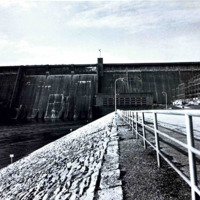
This photo, taken in 1981, shows Norris Dam, originally built in 1936 by the Tennessee Valley Authority. By this time, the dam had long transformed the area, flooding the original river valley to create Norris Lake. The structure represents both…
Pamphlet, "What the Great Smoky Mountain National Park Will Mean to the People of North Carolina"
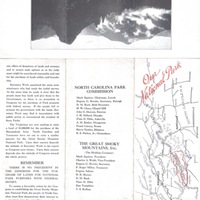
A pamphlet published by the North Carolina Park Commission, and the Great Smoky Mountains Inc. The pamphlet includes a photo, map, and information regarding the potential benefits of creating the park.
Norris Construction Photo
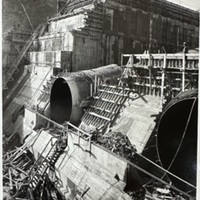
The partial completion of Norris Dam is showcased in December as construction continued through 1934. Chiefly visible are massive tubes, likely to be "penstocks" or "draft tubes".