Racial Boundaries in Atomic America
The stories of people of color that contributed to the Manhattan Project are often overshadowed by their white male counterparts. During the time of the Manhattan Project, Jim Crow laws still applied in Tennessee. Thus, black Americans faced many social inequities.
One primary example of these iniquities are the housing inequalities present in Oak Ridge. Generally excluded from scientific positions, the vast majority of black employees were lower-level laborers such as construction workers, janitors, or domestic workers.
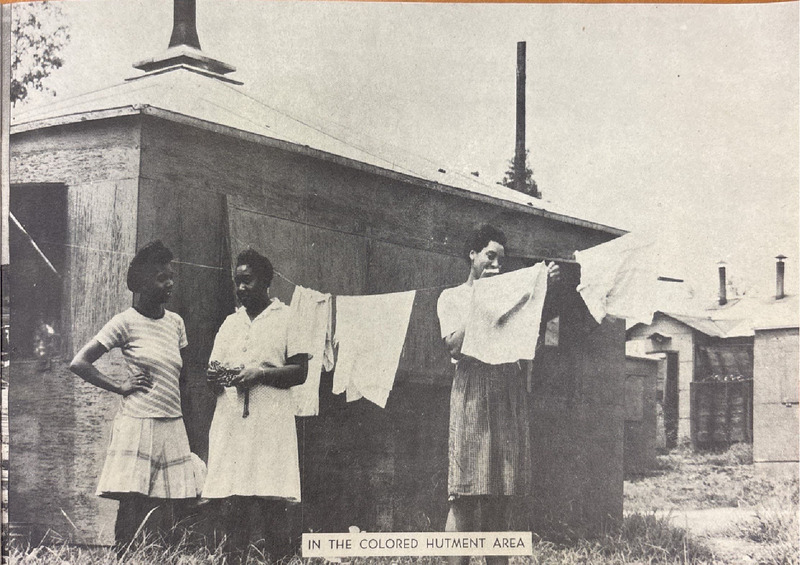
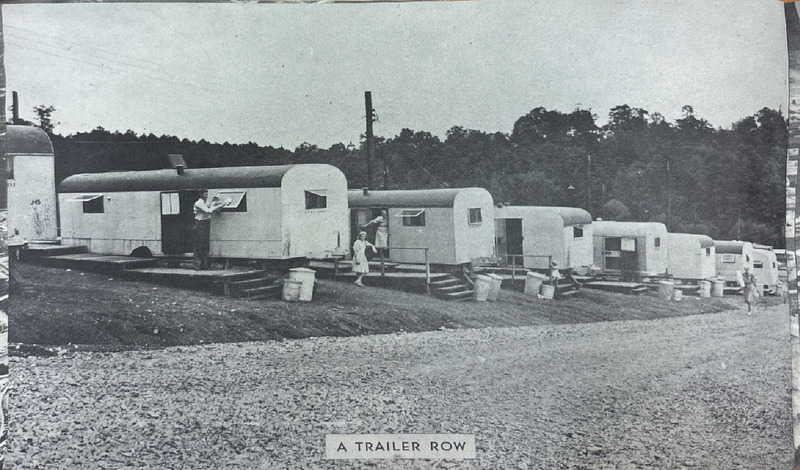
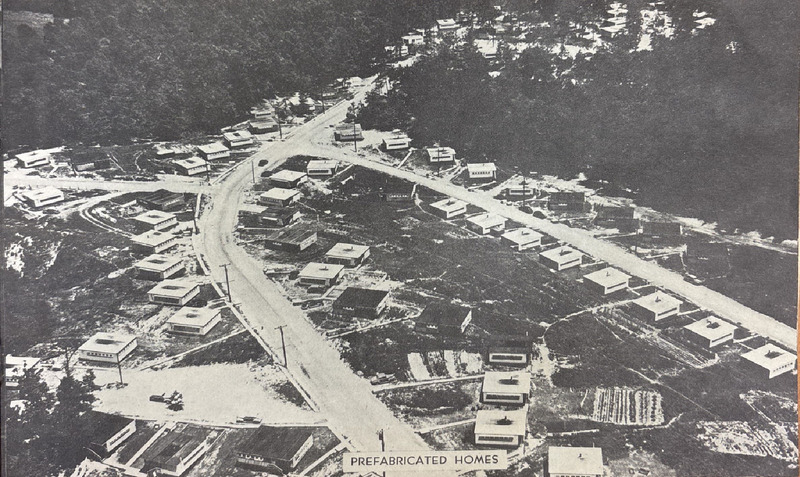
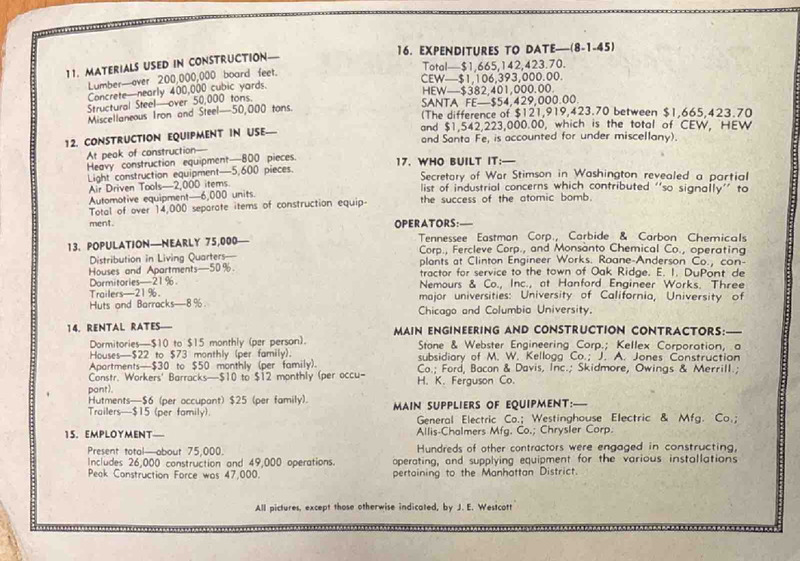
Housing options for these workers were slim and expensive for the value. As pictured, black laborers were required to live in hutment-style housing with significantly less space and amenities. The rental rates for hutment housing was $25 monthly per family, or $6 per occupant. As compared to the more pleasant housing options for white individuals, this is marginally more costly for its worth; apartments for white individuals ranged from $30 to $50 monthly per family. According to the National Parks Service, the hutments were built with plywood with screenless, open windows with shutters and a central oil stove. Those who lived there experienced hot summers and freezing winters, with communal bathhouses and strict curfews.