Making the Case for a National Park
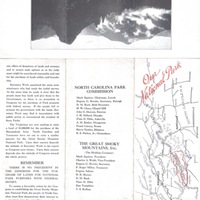
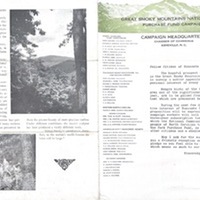
Creating the Great Smoky Mountains National Park required ordinary people to donate money to buy the land, because Congress had no precedent for using federal funds to purchase national park property. That made public persuasion essential, and these pamphlets are a direct example of that persuasion in action.
The "What the Park Will Mean" pamphlet reads almost like an advertisement. It pitches the park in economic terms first: tourist traffic, road improvements, business investment. It also argues that lumbering operations were destroying forests at a million trees a year and that the park was the only permanent solution. Conservation is mentioned, but it is framed as a benefit to industry rather than something valuable on its own. That framing tells us a lot about who the audience was.
The Purchase Fund Campaign pamphlet shows the organizational infrastructure behind the effort. It lists the North Carolina Park Commission and a private holding company called "The Great Smoky Mountains, Inc." with their officers by name, includes a map of the proposed park boundary, and warns in bold that Congress would not act without the public demonstrating financial commitment first. North Carolina and Tennessee each needed to raise around one million dollars before the federal government would take the project seriously.
These sources show that the park happened because a coalition of business leaders, conservationists, and civic organizations ran a coordinated public campaign to make it happen. The reasons people supported the park varied, but the result was the same.