How the Organizational Structure Fosters Action
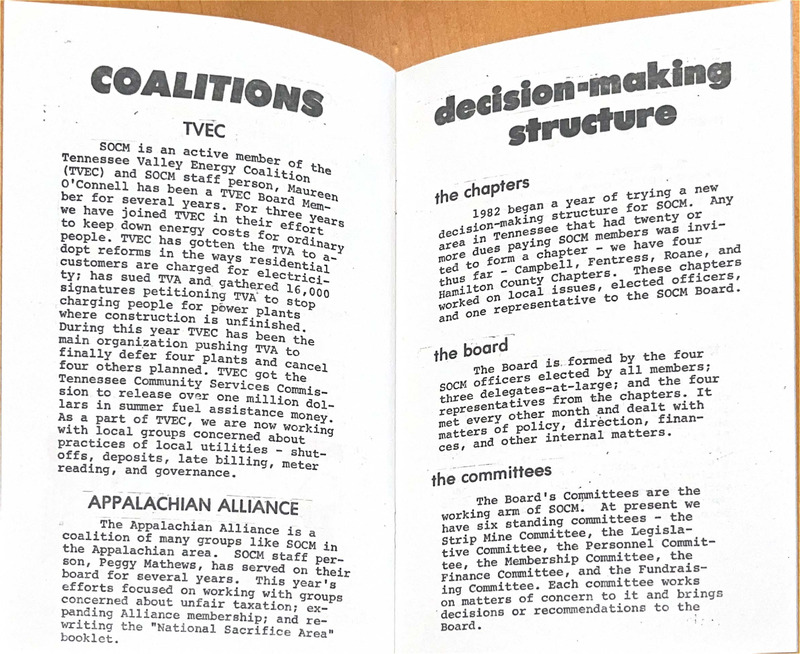
SOCM was founded during the peak of grassroots political action. In the 10 years following their founding they underwent a structural reconfiguration which allowed them emphasis back on grassroots action despite the growing membership, by creating county chapters in places with existing members and building out from there.
A coalition is a group of similarly motivated organizations who unite into a larger group to address a problem. This a way to create a wider reach and share funds when dealing with large scale and/ or expensive issues. In both of the coalitions referenced in the 1982 SOCM actually had members serving on the coalitions' boards proving that SOCM has a voice in these organizations.
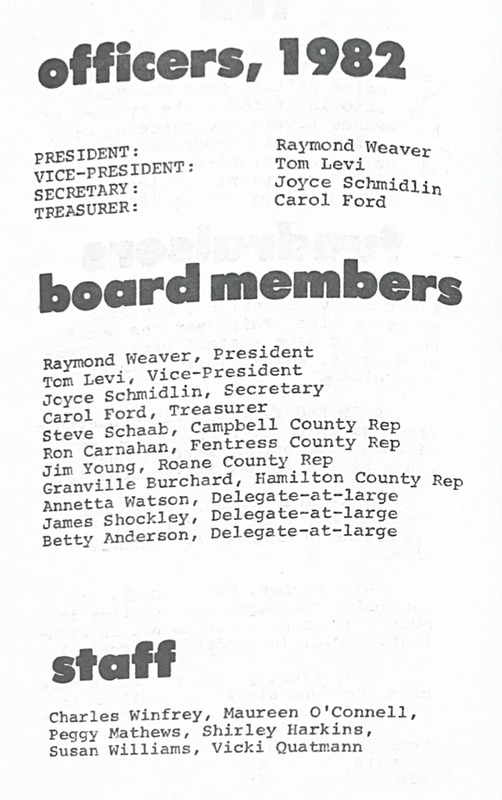
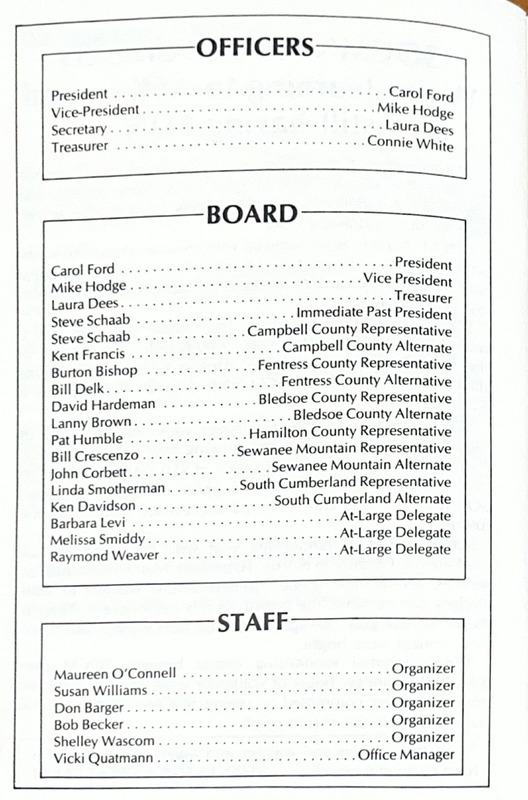
Each level (chapter and state) has their own group of leadership. On display here is the leadership of the whole organization in both 1982 and 1986 to show how the organization's leadership grew in just four years. Most organizations use a similar officer structure for their chapters and the leadership they report to. So, we can infer that each chapter has similar officer positions as well.
I believe the precense of only a few officers at each level shows that the organization really relies on the members to make decisions and the officers are just there to keep everyone on the same page as opposed to controlling the actions of the organization.
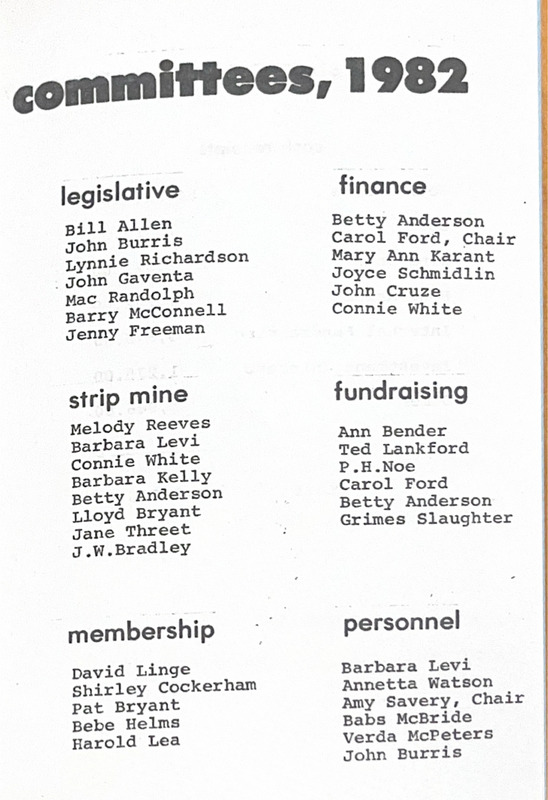
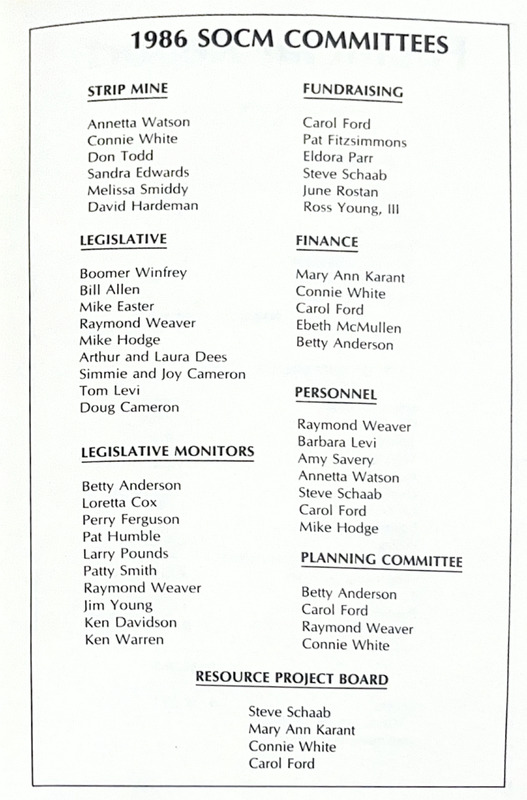
Similarly to the officers, we can learn a lot about an organization from how they seperate their committees. Given the orgins of the club it is understandable they would have an entire committee dedicated to monitoring it. Though I still think it is worth calling out specifcally as it is the only committee dedicated to a specific cause as opposed to an administrative function.
We can also see the growth of the organization. Just 4 years after the organizational restructing two committees were added, legislative monitors and resource project board, and committee membership rose by ~43%.