Building Norris Dam: Work, Opportunity, and Sacrifice
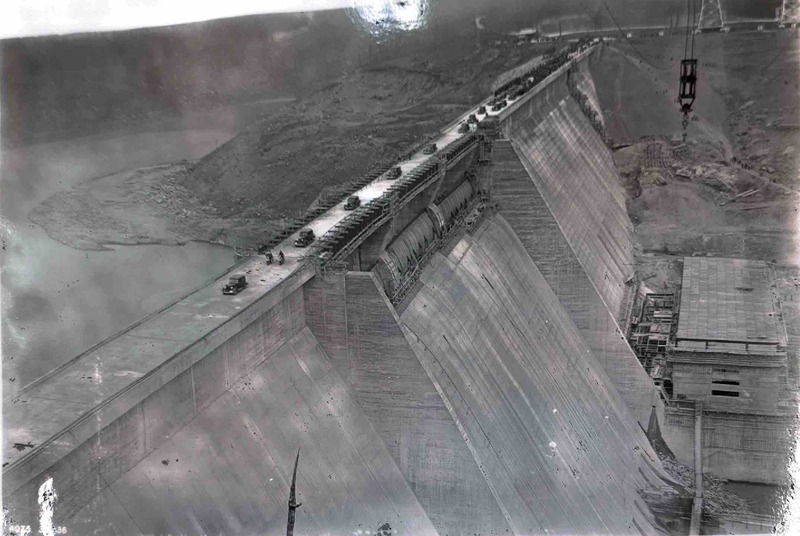
This photograph illustrates the construction of Norris Dam which was one of the largest and first major works initiated by President Franklin D. Roosevelt's "New Deal". The scale of the dam itself and the labor involved in building it are highlighted by the workers and heavy equipment altering the natural landscape to create an area where goods could be produced through industrial processes. Instead of viewing the river as a natural feature, it appears that the river has been transformed to become a source of controlled or engineered water flow; illustrating how Americans' understanding and utilization of nature changed significantly during this era.
Norris Dam was constructed not only to generate jobs but to introduce electrical power to the many rural areas that had no such modern infrastructure. The TVA marketed the dam as a method to "modernize" a farm region that they so often called "backward." They sought to alter daily life through the introduction of electrical power to homes and farms. With electricity, farmers were able to have electric lighting, new appliances, and increased efficiency in their agricultural practices thus fundamentally changing how individuals lived and worked.
The photograph depicts this notion of modernizing. The large and permanent presence of the dam clearly illustrates man's ability to control his environment through the redirection of rivers for economically and technologically based purposes. Unlike the pre-existing rural environments composed of many small farms and scattered communities, this photograph portrays a centralized and industrialized use of land. The dam serves as an icon of progress demonstrating the widespread belief that technology and government planning can enhance the quality of both the land upon which residents depend and their own lives.
At the same time, however, this photograph demonstrates another aspect of the transformation. While creating jobs and increasing access to electrical power, the dam was constructed on land from which previous communities existed. Therefore, the modern, electrified world provided by the TVA did so at the cost of those rural lifestyles that previously characterized the region. Consequently, Norris Dam illustrates the dual aspects of progress and loss offering individuals economic opportunities along with advancements in technology, while eliminating long established ties between people and land.